chicken road, Bet India

chicken road, guide for aviator game.

What is chicken road?

Chicken Road is a provably fair crash-style game available at Bet India where you control a chicken hopping across a road lined with active frying pans. Each pan the chicken lands on safely multiplies your stake, but land on a hot pan at the wrong moment and your round ends instantly with the staked amount lost. The further your chicken travels down the road, the higher the multiplier climbs, and the greater the danger with every additional hop.

Unlike traditional slot games where a spin resolves in a fixed animation with no player input, Chicken Road puts every exit decision in your hands. You choose when to jump, when to hold, and, most critically, when to cash out before the next pan burns. The game runs on a certified random number generator, meaning each pan's heat level is determined independently, with no exploitable pattern across rounds. Provably fair verification hashes are published after every round so any player can confirm outcomes were not manipulated server-side.

  • Base multiplier: 1× at the starting pan, increasing with every successful hop, typical rounds reach between 1.2× and 3× before burning, with occasional runs past 10×
  • Stake range at Bet India: from ₹10 up to ₹10,000 per round, covering casual ₹50 sessions and high-stakes play above ₹5,000
  • Auto cash-out: set a target multiplier before the round begins and the game exits your position the moment it is hit, faster than any manual click
  • Round speed: each game resolves in approximately 8 to 20 seconds, meaning a 30-minute session can involve 90 to 150 individual rounds, session management is therefore critical
  • House edge: approximately 3 to 5% depending on the variant, comparable to European roulette and lower than most Indian lottery-style games

Chicken Road sits alongside Aviator in the crash-game category on Bet India. The core mechanic is identical, a multiplier climbs until a random bust point and you must exit before that bust, but the visual framing differs meaningfully. Aviator uses a rising plane on a continuous graph; Chicken Road uses pan-by-pan hops, which many Indian players find easier to pace because each pan represents a discrete decision point rather than an unbroken climbing curve.

Players who find Aviator's graph format emotionally overwhelming often switch to Chicken Road for the same payout structure with a slower perceived tempo. Winnings are credited to your Bet India wallet instantly after each round and can be withdrawn to a linked UPI ID, PhonePe wallet, or Google Pay account without any currency conversion fees.

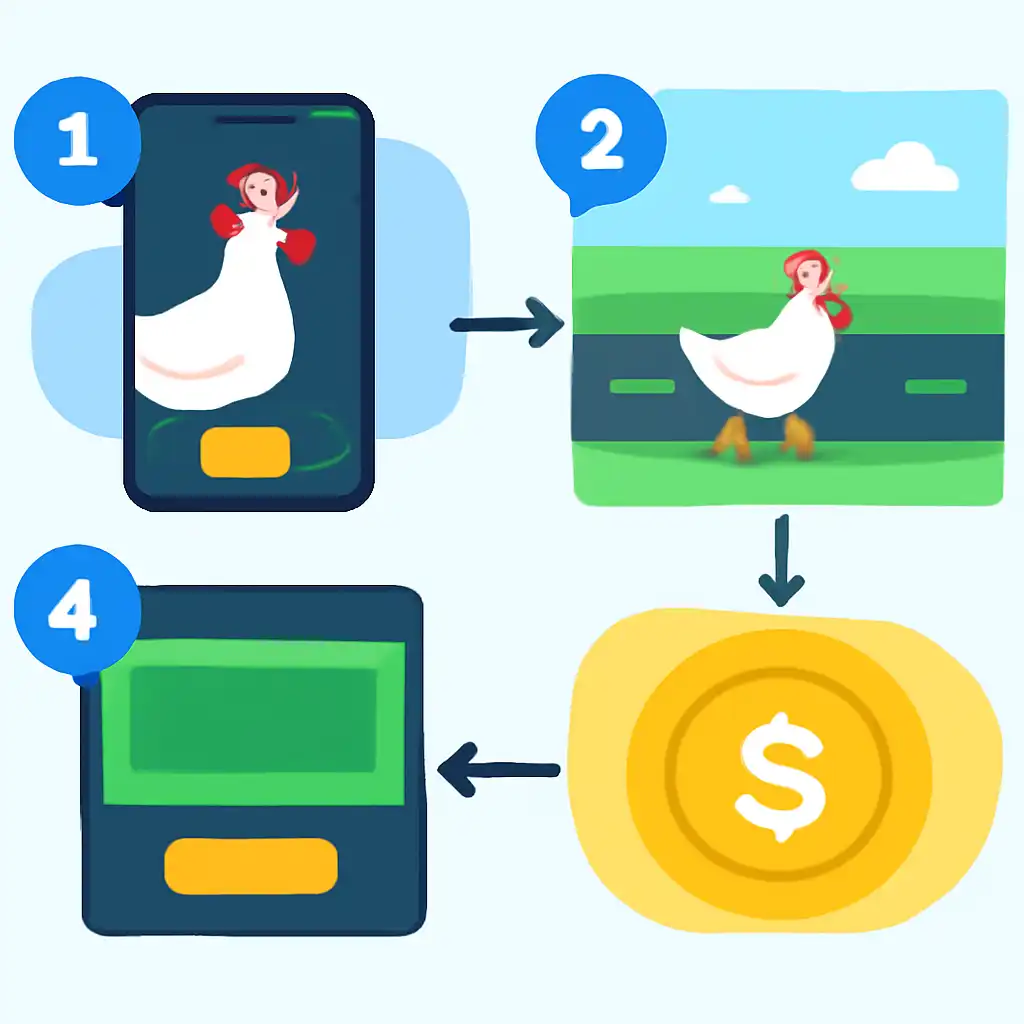
chicken road step by step

  1. Log in to Bet India and fund your account.

    Visit bet-ind.com and sign in with your registered mobile number and password. If your wallet balance is below your intended session budget, go to Deposit and select your preferred Indian payment method. UPI via PhonePe, Google Pay, or BHIM processes in under 60 seconds with a minimum deposit of ₹200. Net banking via IMPS settles within 2 minutes. Paytm wallet deposits work for amounts up to ₹10,000 per transaction. Funds appear in your Bet India wallet before you proceed to the game lobby.

  2. Navigate to Chicken Road.

    From the main lobby, tap Casino in the bottom navigation bar, then filter by Crash Games in the category strip. Chicken Road appears alongside Aviator, JetX, and Mines. Alternatively, type "chicken" into the search bar, the game card loads immediately. Tap the card to launch the game in your browser. No app download or plugin is required; the game runs on HTML5 and works on any Android or iOS device running a current browser.

  3. Set your bet amount for the round.

    The stake selector sits below the game window. Type a precise value, say ₹150, or tap the pre-set chips: ₹10, ₹50, ₹100, ₹200, ₹500, ₹1,000. A and ½ button let you double or halve your current stake instantly, useful when scaling up after a winning run or stepping down after a loss. Your bet locks the moment the round starts, so confirm the amount before the chicken begins moving.

  4. Choose manual or auto cash-out mode.

    Toggle between the two modes using the switch above the bet button. In Manual mode, you tap the green Cash Out button yourself at any point during the round, the exit executes at the multiplier displayed at that exact millisecond. In Auto mode, type your target multiplier into the auto cash-out field, for example, 2.00, and the system exits your position automatically the instant the multiplier hits that figure. Auto mode is strongly recommended for beginners because it removes the reaction-time variable and eliminates second-guessing at the critical moment.

  5. Watch the chicken hop and track the live multiplier.

    Once the round starts, the chicken hops from pan to pan. Each safe landing increments the multiplier counter displayed prominently in the centre of the screen, 1.20×, 1.45×, 1.80×, 2.10×, and so on. Other active players' cash-out points appear as small pop-up notifications on the left side, showing usernames and the multiplier at which they exited. These are live data points, not recommendations, ignore them if they tempt you to hold longer than your pre-set plan dictates.

  6. Cash out before the chicken burns.

    Tap Cash Out at any active multiplier to secure your winnings. Your payout equals your stake multiplied by the multiplier at exit. Example: a ₹500 bet cashed out at 2.40× returns ₹1,200, a ₹700 profit credited instantly to your wallet. If the chicken lands on a burning pan before you exit, the round closes and the full staked amount is lost with no partial recovery.

  7. Review the result and plan your next stake before the next round starts.

    After each round, a results overlay shows the final multiplier reached, whether you cashed out or burned, your profit or loss for the round, and your updated wallet balance. The countdown to the next round, typically 5 seconds, appears immediately. Use this window deliberately: decide your next stake and mode before the countdown ends rather than clicking reactively. This brief pause is where disciplined session management is either built or abandoned.

  8. Withdraw winnings via UPI, PhonePe, or GPay.

    When you are ready to end a session, go to Withdraw in the Bet India menu. Select UPI as the method and enter your registered UPI ID, compatible with PhonePe UPI, Google Pay UPI, BHIM UPI, or any bank-linked UPI handle. The minimum withdrawal at Bet India is ₹500. Processing time is typically 15 to 30 minutes during business hours; overnight requests may take up to 4 hours. Withdrawing via the same UPI method used for deposit speeds up KYC verification on your first withdrawal request.

chicken road for new players

If you are joining Bet India specifically to play Chicken Road, the first session should focus on understanding volatility rather than chasing large multipliers. The following guidance is written for players with little or no crash-game experience and assumes a starting budget in the ₹200 to ₹1,000 range.

Start with the demo version

Bet India offers a practice mode for Chicken Road that uses virtual chips with zero real-money exposure. Access it by tapping Demo on the game card before launching. Run at least 30 rounds in demo mode before depositing real funds. Your goal during demo play is not to find patterns, none exist, but to build the physical habit of clicking cash-out at a predetermined multiplier. If you mentally target 1.8× but your hand hesitates at 1.9×, 2.0×, and 2.2×, that hesitation is exactly what erodes real-money bankrolls. Demo mode is where you train the instinct to exit on schedule, not on emotion.

Set a session budget in rupees before you open the game

Decide on a hard stop-loss before launching and transfer only that amount to your available balance. If your Bet India wallet holds ₹3,000 but your session limit is ₹500, withdraw ₹2,500 to your PhonePe or GPay account before starting. Making a redeposit mid-session requires a deliberate extra step through UPI, which acts as a natural circuit breaker against impulse reloading after a losing streak. Practical starting structures by budget level: a ₹200 session across 20 rounds at ₹10 stake gives a high round count ideal for learning burn frequency; a ₹500 session at ₹20 stake per round provides enough sample size to observe real variance; for ₹1,000, split into two ₹500 sub-sessions with a 15-minute break between them to reset emotional state.

Target low multipliers consistently in early sessions

New players lose most frequently by waiting for 10× or 20× multipliers. Statistically, reaching 10× means nine consecutive safe hops, each with independent burn risk. A disciplined entry approach for first-week play: set auto cash-out at 1.5× for your first ten real-money rounds. At 1.5×, a ₹100 bet returns ₹150, a ₹50 profit per round. Move to 2.0× auto cash-out only after completing at least two full sessions without changing your target mid-round.

Reserve targets above 5× for occasional speculative bets at your minimum stake (₹10), never at your standard session stake. Compared to Aviator, where the continuous graph makes high multipliers visually compelling, Chicken Road's pan-by-pan format gives you a natural pause at each hop, use those pauses to reaffirm your exit plan rather than extend it.

Use Bet India's welcome bonus correctly with Chicken Road

New Bet India accounts are eligible for a first-deposit bonus. Read the wagering requirement terms before using bonus funds on Chicken Road, crash games sometimes carry different contribution rates toward wagering requirements than slots do. If Chicken Road contributes 100% to wagering, a disciplined low-multiplier strategy is efficient for clearing bonus funds. If the contribution rate is lower, clear the bonus on eligible games first, then play Chicken Road with freed real-money balance to avoid extending your required wager volume unnecessarily.

chicken road safety and timing

Timing and safety discipline in Chicken Road are not about predicting the next burn, that is mathematically impossible on a provably fair RNG. They are about structuring your real-money behaviour so that variance works within a controlled range rather than wiping a session in a handful of unlucky rounds. The following practices address the two biggest controllable risk factors: when you play and how you manage your exit speed.

Connection quality directly affects manual cash-out timing

Chicken Road rounds resolve in seconds. On a slow mobile data connection, common in tier-2 and tier-3 Indian cities during peak evening hours between 8 PM and 11 PM IST, a manual cash-out tap can lag by 200 to 600 milliseconds before the server registers it. At a multiplier climbing from 2.0× to 2.5× in under three seconds, a 500ms lag means your intended 2.1× exit becomes a 2.4× exit if lucky, or a burn if the pan fires in that window.

To reduce this risk: play Chicken Road on a 4G or Wi-Fi connection rather than 3G; prefer auto cash-out mode during high-traffic hours; if you must use manual mode, set your mental target 0.1× to 0.2× lower than your actual target to absorb the tap-to-server delay. Players using BSNL or Airtel fixed-line broadband via Wi-Fi consistently report more reliable manual exits than those on JioFi hotspots during peak hours.

Identify your personal tilt pattern before it costs money

The most common safety failure in Chicken Road is not a bad strategy, it is abandoning a working strategy after two or three consecutive burns. A sequence of three burns at 1.5× auto cash-out is statistically unremarkable given the game's variance, but emotionally it creates pressure to "recover" by switching to a 5× or 10× target on the next round. This single decision, changing target multiplier immediately after a loss streak, accounts for a disproportionate share of session losses among new players.

Specific safeguards: write your session stake and target multiplier on paper or in a phone note before launching; if you change either figure mid-session, close the game and take a 10-minute break before reopening; use Bet India's responsible gambling deposit limit tools under account settings to cap daily deposits at your pre-decided session budget, preventing top-ups during emotional play.

Best times to play for speed and payout reliability

Bet India's Indian player base peaks between 7 PM and 11 PM IST, which coincides with higher server load and, on mobile networks, higher cell tower congestion across Maharashtra, Karnataka, and Delhi NCR. For the most responsive game experience, especially relevant if you use manual cash-out, morning sessions between 7 AM and 11 AM IST offer lower latency and faster withdrawal processing. First withdrawals of the day via PhonePe or GPay UPI typically settle within 10 to 15 minutes during morning hours versus 25 to 45 minutes in peak evening windows.

For players in smaller cities with inconsistent 4G coverage, downloading the Bet India mobile site as a progressive web app (PWA) by tapping Add to Home Screen in Chrome or Safari reduces initial load time and maintains a lighter data connection during rounds, which marginally improves cash-out registration speed on patchy signals.